Trauma & Its Impact
Trauma
is the response to an event or events that are physically or
emotionally harmful, and negatively impact well-being and functioning.
Trauma can happen to individuals, families, and whole communities.
Rates of trauma are significantly higher among people who receive
behavioral health services. Trauma can happen to us directly, or we can
witness or hear about it happening to others. There are many types of
traumas, and often people experience multiple traumas over their
lifespan.
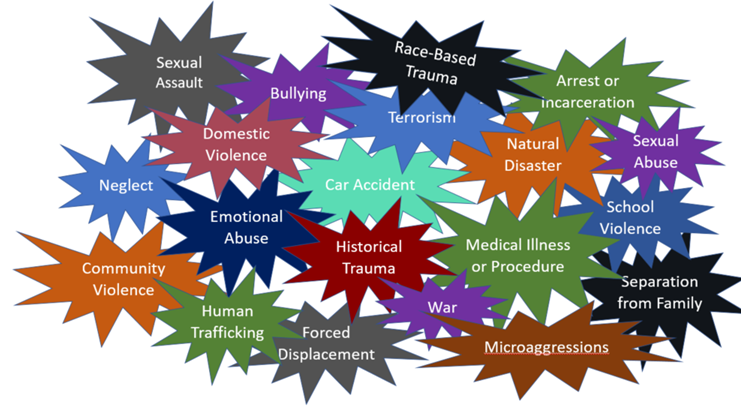
Trauma impacts everyone differently and
there is no right or wrong response: sometimes the impact is small or
short-lived, for others it can be severe or last a long time. Trauma
can have a significant impact on an individual's health and well-being,
and can lead to a sense of powerlessness, fear or hopelessness, and a
constant state of alertness within an individual. Here are some common
responses to trauma:
Learn more about trauma and its effects here.
Learn more about the impact of trauma here.
Trauma-informed
care is an approach to engaging people that recognizes the potential
presence of trauma symptoms and acknowledges the role that trauma may
play in an individual’s life. Resilience-oriented approaches ensure
that people not only survive, but are supported to thrive to try to
reach their full potential. When a human service agency becomes
trauma-informed, every part of its organization, management and service
delivery system is designed to be sensitive and responsive to
recognizing how trauma affects the lives of individuals and their
engagement in services.
Trauma-informed, healing-centered,
resilience-oriented care shifts the paradigm from asking “'What's wrong
with you?” to asking: “What happened to you?" and “What’s strong with
you?”
Learn more about trauma-informed approaches:
Positive and Adverse Childhood Experiences: PCEs and ACEs
Adverse
Childhood Experiences (ACEs) refer to many different types of traumatic
events that can happen in childhood. Research shows that ACEs increase
risk for a variety of health, behavioral health and social concerns
throughout life. Learn more about ACEs and about ACEs and toxic stress.
![]()
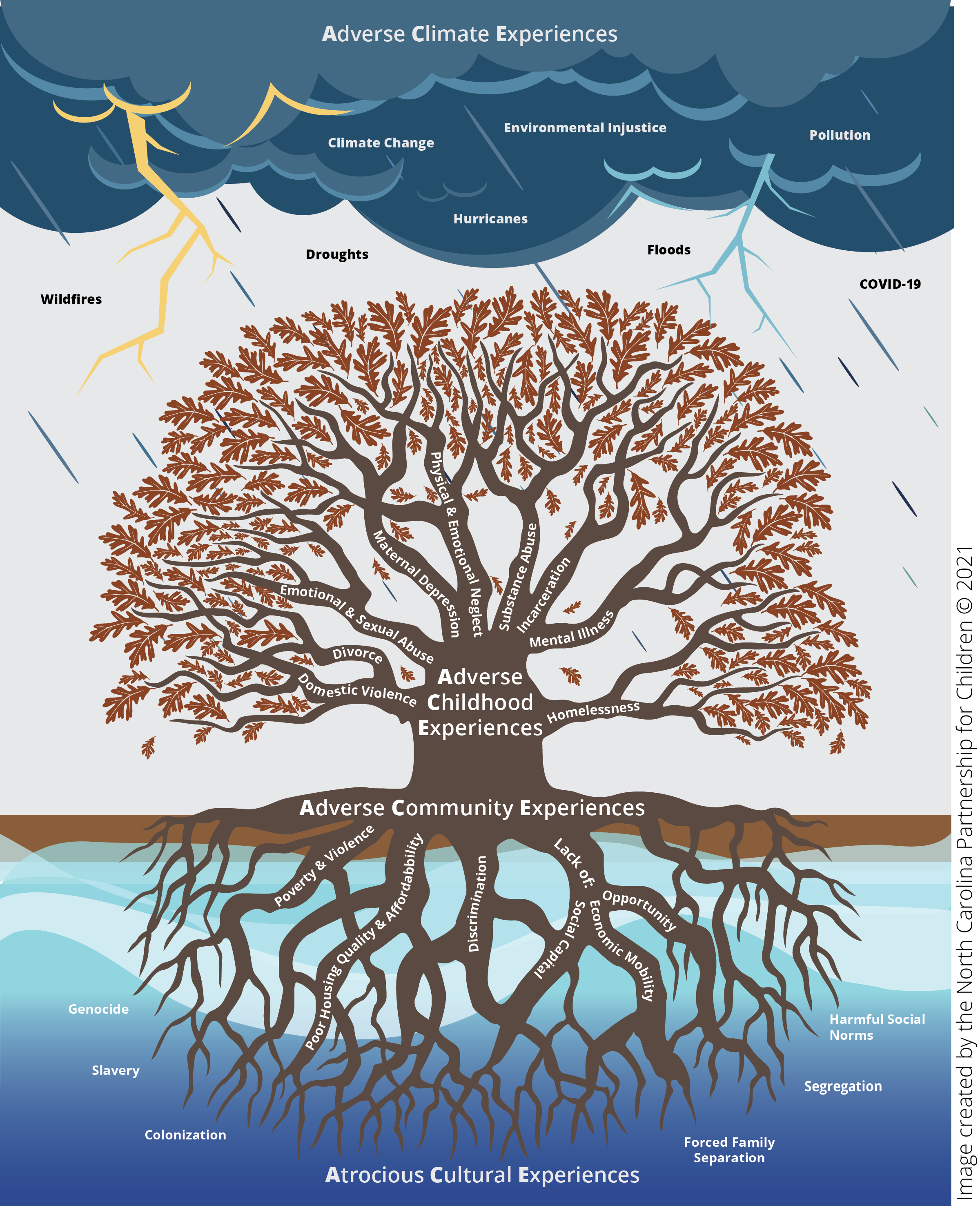
Research
also demonstrates that Positive Childhood Experiences (PCEs) or
protective factors, are powerful agents to reduce risk from childhood
adversity. The building blocks of positive experiences can help us
build resilience to heal from the negative effects of trauma and
adversity.
If you or someone you know is impacted by trauma
Promote Connection - talk to someone you trust about how you are doing; call or text 988 if you are worried about your own or someone else’s safety.
Support Safety
- make sure you or the person are physically safe; help others feel
psychologically safe by promoting trust through honesty, listening, and
just being there. After a natural disaster or loss, make sure basic
needs (i.e. housing, food, clothing, transportation, communication) are
met as quickly as possible.
When should I seek support from a behavioral health professional?
You may want to seek a professional behavioral health provider
(counselor, therapist, psychologist, etc.) if the effects of the trauma
are getting in the way of daily functioning over a period of time. For
example, if you or someone you know are experiencing nightmares or
flashbacks, or can’t stop thinking about what happened; avoiding certain
places, people or things; can’t concentrate because you’re always on
the alert for something bad to happen; or having persistent negative
thoughts or feelings. Learn about PTSD here.
Resilience
is “the process of adapting well in the face of adversity, trauma,
tragedy, threats, or significant sources of stress—such as family and
relationship problems, serious health problems, or workplace and
financial stressors” (American Psychological Association). We can build
resilience over time through:
Resilience
is important for everyone, and can be nurtured at anytime in our life.
Supporting resilience may be especially important for people exposed to
trauma including veterans, persons facing medical concerns, persons
living in new or unexpected situations, persons who have experienced
natural disasters, persons experiencing traumatic loss, and persons in
recovery. Learn about building resilience here and about building childhood resilience here.
Trauma & Resilience in Early Childhood, Childhood & Adolescence
Exposure
to trauma in childhood can have lasting impact, however, exposure to
positive childhood experiences (PCEs) can counter those effects. Learn
more about how to prevent and respond to childhood trauma, and promote
positive childhood experiences below.
Trauma & Resilience and Mental Health
Research
indicates high rates of a history of trauma exposure among people with
mental health challenges. Although post-traumatic stress disorder
(PTSD) is a diagnosis, it should be seen as a human reaction to an
extraordinary experience, an attempt to survive. Sometimes symptoms of
PTSD co-occur with other mental health concerns and it’s important to
ensure that trauma is considered in developing a treatment plan and
diagnosis. Learn more here.
Trauma & Resilience and Substance Use Disorder (SUD)
Trauma
exposure and substance use are closely connected: persons in treatment
for substance use disorder report high rates of exposure to trauma in
their lives. For some, they may use substances as a means of coping
with the effects of their traumatic experiences. For others, their
substance use may increase risk for experiencing trauma. The link
between SUD and trauma is true for youth and adults; co-occurring
treatment to address both traumatic stress and substance use is
recommended. Learn more about Substance Use and Traumatic Stress and about Making the Connection: Trauma and Substance Abuse in families.
Trauma & Resilience and Intellectual and Developmental Disabilities
Trauma & Resilience at Work
Many
jobs put workers in contact with trauma, either directly (e.g. first
responders, disaster responders) or by working with people who have
experienced trauma (health care providers, behavioral health providers,
educators, other helping professionals). It’s important to recognize
when this exposure to trauma in the workplace may negatively impact
professional well-being. And, it’s important to know strategies that
can help prevent, or reduce the effect of burnout, compassion fatigue,
vicarious traumatization and secondary traumatic stress. Learn more
about how to recognize, prevent and manage stress from work at Well@Work. You can learn about professional well-being from this video series.
For more information about trauma and resilience, contact:
Brittany A. Barber
Program Administrator for Trauma-Informed Care
Department for Behavioral Health, Developmental and Intellectual Disabilities
Additional Links
Kentucky Resources