The Prevention and Promotion Branch of the Division of Substance Use Disorder (DSUD) provides training and technical assistance on evidence-based substance use/misuse prevention to the 14 Regional Prevention Centers (RPCs) across the state as well as other state and community partners. The Branch focuses on the following:
- Prevention Enhancement Specialists provide training and technical assistance on alcohol, cannabis, nicotine, and stimulant use/misuse prevention including addressing the shared risk and protective factors for using those substances, suicide, and mental health
- Youth Empowerment to enable youth to be leaders in substance use/misuse prevention in their communities
- Workforce Development which includes training for current prevention workforce members as well as a paid internship program for undergraduate and graduate students
- Evidence-based programming for schools such as Sources of Strength (Sources) and Too Good for Drugs as well as toolkits, like the Evidence-Based Programming Guide for Schools, linked here
- Statewide projects such as The Dinner Table Project to promote family bonding and resilience and Partners in Prevention to provide information on ways different segments of the community can help prevent substance use/misuse
- The Purple Star Program to recognize schools who provide extra support for military-connected youth
- The Synar program to help prevent sales of nicotine products to those under 21
- The Zero Tolerance program for youth who are charged with under 21 alcohol-related driving
- Efforts to reduce opioid misuse and promote harm reduction measures
- Emerging issues in substance use and related consequences
Why Prevention
DBHDID supports prevention strategies that focus on increasing awareness of the issues related to substance use/misuse and mental health. This work is guided by the six Center for Substance Abuse and Prevention strategies:
- Distributing information on how substance use/misuse and mental health affect individuals, families, and communities
- Educating community members on ways to avoid risky behaviors
- Changing environmental contexts that encourage substance use or increase mental health issues
- Creating alternatives to engaging in substance use
- Building capacity of community partners to engage in prevention
- Identifying those at greatest risk and connecting them with trained care and resources
Interventions are selected based on the individual needs of the community as identified in a multi-pronged needs assessment built from local data surveillance efforts.
What Works
Evidence-Based Prevention
When selecting prevention programs and strategies its best to select program that research has proven to be effective at changing behaviors and improving public health. These programs and strategies are often referred to and known as “evidence-based practices." Evidence-based practices include “programs, policies, or other strategies that have been evaluated and demonstrated to be effective in preventing health problems based upon the best-available research evidence."
Types of prevention programs that have been shown to boost protective factors and eliminate or reduce risk factors for drug use/misuse include:
- Universal: address risk and protective factors common to all individuals in a given setting, such as a school or community.
- Selected: are for groups of individuals who have specific factors that put them at increased risk of drug use.
- Indicated: Designed for individuals who have already started using drugs or who have already experienced consequences to their substance use.
What Won’t Work
While research has identified important elements of effective drug prevention strategies, research has also identified strategies that have not been shown to reduce alcohol, tobacco, and other drug use. These strategies include:
- scare tactics and moralistic appeals
- curricula that rely solely on information about drugs and their dangers
- curricula that only work to promote self-esteem and emotional well-being, without providing training in resistance skills and normative education
- single shot assemblies and testimonials by former addicts may reinforce a negative norm that “everyone uses drugs” at some point in their lives
It is also important to avoid these types of strategies that have been shown to be ineffective in reducing substance use/misuse:
- Counseling students, particularly in peer-group context. This does not reduce substance use or delinquency.
- Offering alternative activities such as recreation and community service activities without additional comprehensive strategies.
- Programs focusing on information dissemination, fear arousal, and moral appeal as they are also not effective prevention strategies.
Intersection of Substance Use/Misuse and Mental Health
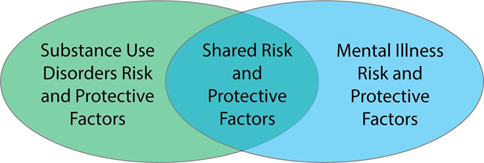
Effective prevention focuses on reducing the factors that put people at risk of substance use/misuse and mental health disorders and strengthening those factors that protect people from the problems.
Risk factors are certain biological, psychological, family, community, or cultural characteristics that precede and are associated with a higher likelihood of behavioral health problems.
Protective factors are characteristics at the individual, family or community level that are associated with lower likelihood of problem outcomes.
Some risk and protective factors are the same for different problems. While there are unique risk and protective factors for each, there is also the intersection.
Existing research and data suggest that there are several common or shared risk and protective factors that impact both substance use/misuse and mental health outcomes.
One coalition, agency or individual cannot adequately impact one or more problems alone, so it makes sense to look for opportunities to work with other sectors/disciplines to address shared risk factors to avoid duplicating efforts, share data, and grow the victories we achieve in promoting health and wellness.
The Division of Substance Use Disorder is committed to addressing substance use/misuse and mental health through shared risk and protective factors.
Citations